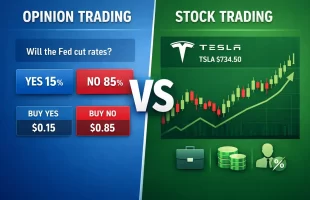
In everyday life, we say ‘Yes’ or ‘No’ to show agreement/disagreement, make decisions, or answer simple questions. But in opinion trading markets, these words can earn you big rewards. Here, ‘Yes’ and ‘No’ are not just responses — they are investments. Each choice reflects what you believe will happen in the real world, whether it’s a cricket match result, a movie’s box office performance, or a political event.
What makes it exciting is that you are not just sharing an opinion, you are actually earning money or rewards from it. If your prediction is correct, you earn a profit. If not, you lose the amount you invested. It’s a new-age way of turning your knowledge, awareness, or instincts into potential earnings.
In this article, we will break down what ‘Yes’ or ‘No’ really mean in opinion trading, how they work, and how everyday people are using them to earn money.
Opinion Trading: The Game of Yes or No
Opinion trading is a type of online prediction game where you can earn money by correctly predicting the outcome of future events in Yes or No. These can be from sports, politics, entertainment, or current affairs. Instead of just sharing your thoughts with friends or on social media, you can get rewarded if you are right.
These questions are presented as markets with two simple choices:
Yes – you believe the event will happen
No – you believe the event will not happen
For example, you might see a market like:
Will India win today’s cricket match?
Will it rain today in (region name)?
Will the new Bollywood movie cross ₹100 crore in 3 days?
Will a new product launch on time?
You choose between “Yes” or “No,” and place a small amount of money on your answer. If your prediction turns out right, you make a profit.
What Does ‘Yes’ Mean?
When you select “Yes” in an opinion market, you are saying that you believe the event will happen. You are backing the success of that outcome. Whether you are a cricket fan, a movie buff, or someone who follows current affairs closely — opinion trading turns your knowledge and instincts into real earning opportunities.
Example of Yes in Opinion Trading:
Market: Will India win today’s cricket match?
Price of Yes: ₹60
If India wins, you get ₹100 back
(₹100 – ₹60 = ₹40 profit)
Result: If India loses, you lose the ₹60 you spent
So, choosing “Yes” means you are confident that the event will take place. If you’re right, you win a payout.
What Does ‘No’ Mean?
When you choose “No,” it means you believe the event will not happen. You are betting against the outcome.
Example of No in Opinion Trading:
Market: Will a movie cross ₹100 crore in 3 days?
Price of No: ₹35
If the movie doesn’t cross ₹100 crore, you get ₹100
(₹100 – ₹35 = ₹65 profit)
Result: If it does, you lose the ₹35 you spent
Choosing “No” can lead to bigger profits if the market thinks the event is likely to happen — because fewer people are betting against it.
How Do Prices Work in Opinion Trading?
Prices for “Yes” or “No” are not fixed. They change based on what people believe will happen and how they are investing. The price is basically a reflection of public opinion or the participants in that particular event.
If most participants think India will win a match, the price of “Yes” will go up, maybe to ₹80 or more. That means a smaller profit if you are right about that prediction. But if you buy early when the price is low, you could earn more. The key is to enter the market when you believe the price is still in your favor.
Here is a quick look at what “Yes” or “No” really mean in opinion trading:
Action
What You Believe
If You’re Right
If You’re Wrong
Buy “Yes” at ₹10
The event will happen
You receive ₹100. Profit = ₹100 – ₹10 = ₹90
You lose the ₹10 you paid
Buy “No” at ₹30
The event won’t happen
You receive ₹100. Profit = ₹100 – ₹30 = ₹70
You lose the ₹30 you paid
This ₹100 is like the full payout per correct position, and prices are simply what you pay to enter the market.
Opinion Trading is Not Just Guessing – It’s Strategy and Skill
Many people think opinion trading is just about guessing, but it is more than that. You need to use news, facts, and your own research or skills to make smart and right predictions. The better your timing and analysis, the higher your chances of winning.
Here are some tips:
Follow the latest news and trends
Understand the topic before investing
Buy early if you see a good opportunity
Watch how prices are moving
Conclusion
In opinion trading markets, “Yes” or “No” are more than just answers — they are predictions backed by money. When you click either option, you are expressing confidence in an outcome and hoping to earn if you are correct.
Whether it’s about cricket, movies, elections, or weather, every decision involves a bit of strategy, a bit of timing, and a strong belief. So, the next time you’re sure about something — think about whether you’d back it with a “Yes” or “No” in the market.
Pankaj Suyal is a sports enthusiast and fantasy gaming expert who transforms his love for the game into compelling content. From match previews to player analysis and trending updates, he brings the sports world closer to his readers. When he is not writing, you will find him creating fantasy team or deep into a book (Yes, he is a bibliophile).