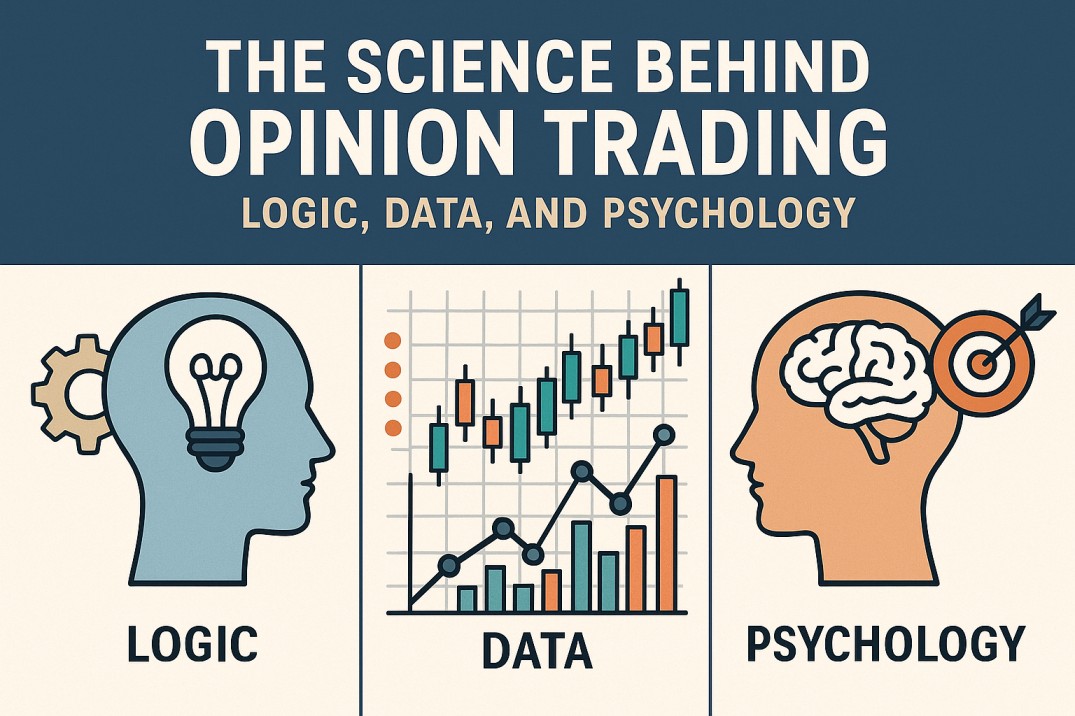
Opinion trading blends behavioral science, data analysis, and market dynamics to create a new way of engaging with real-world events. Instead of buying or selling stocks, participants trade predictions on the outcomes of events like elections, sports matches, or economic trends. The science behind it lies in the concept of crowd wisdom, where collective opinions are used to forecast future outcomes.
By analyzing user sentiment, confidence levels, and market trends, opinion trading platforms turn individual beliefs into measurable market activity, offering a unique and data-driven approach to understanding public perception.
What are Opinion Trading Apps?
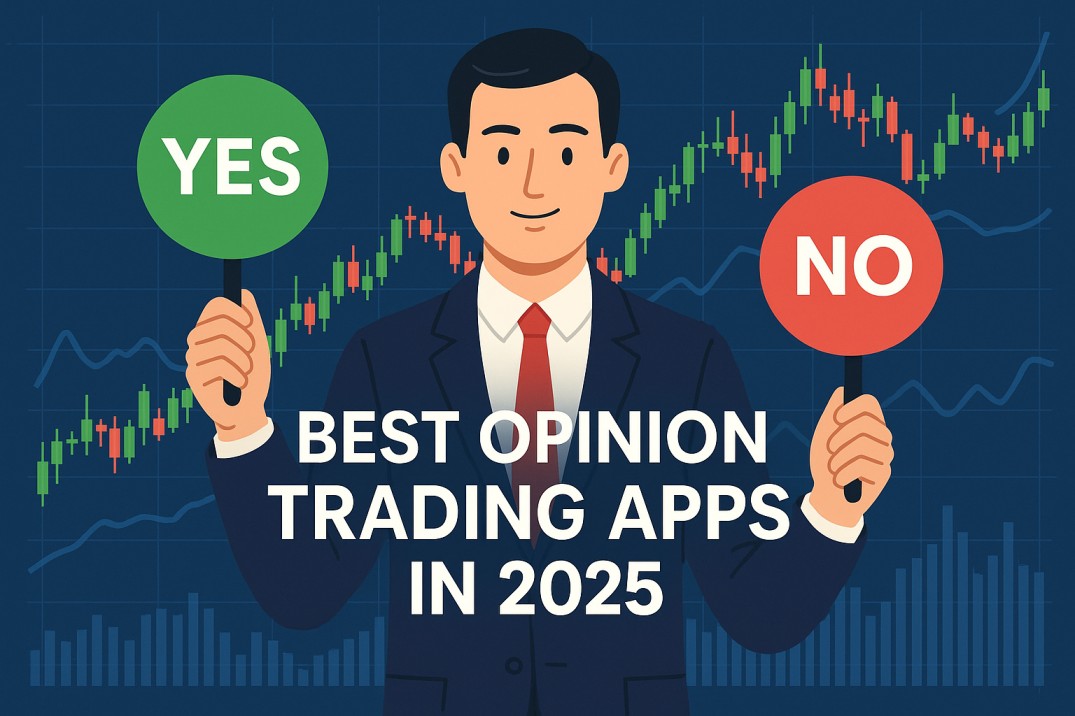
Opinion trading apps allow users to make predictions of actual events in the world, from sports and politics to finance and entertainment, and receive rewards based on how correct they are. The apps themselves have no stocks or securities but employ user opinions to make it possible, in a sense, for people to “trade” on the likelihood of something occurring.
Example – “Is the Indian cricket team likely to win their next match?” or “Will a particular stock close above ₹1,000 today?” If you believe the answer is yes, you can “purchase” that belief. If the event materializes as predicted, you gain; if not, you lose your bet.
Unlike fantasy sports or gambling, opinion trading is based on current information, research, and analysis, which makes it a skill game, not a chance game.
How Opinion Trading Tests Your Skills
Opinion trading is more than just making guesses. It is a real-time test of your analytical thinking, risk management, and decision-making abilities. To succeed, you need to stay informed, interpret news and data accurately, and understand how public sentiment is shifting.
In a nutshell, opinion trading pushes you to analyze trends, cut through the noise, and make well-timed, strategic predictions driven by logic, research, and clear judgment instead of emotion.
Analytical Reasoning: Breaking down events and understanding latent trends.
Data Interpretation: Using statistics, historical outcomes, and live data in decision-making.
Risk Management: Figuring out how much to risk on an opinion based on confidence level and risk tolerance.
Timing and Strategy: Understanding when to enter or exit a trade based on changing odds or outside factors.
Both of these skills, combined, make opinion trading more than a yes-or-no bet; it’s an intellectual challenge for a user to demonstrate that they have some understanding of what’s happening in the world around them.
The Scientific Foundations of Opinion Trading
Opinion trading is rooted in several well-established scientific principles that explain how and why collective predictions can often be accurate. At its core, it combines insights from behavioral economics, prediction market theory, and statistical modeling to transform public sentiment into actionable forecasts.
1. The Wisdom of Crowds
One of the most fundamental concepts behind opinion trading is the “wisdom of crowds.” This theory suggests that when a diverse group of people each make independent predictions, the average of their opinions is often surprisingly accurate. This is based on the idea that individual errors tend to cancel each other out, leaving a collective answer that reflects the most probable outcome.
2. Prediction Market Theory
Opinion trading platforms operate similarly to prediction markets, where each prediction is treated like a tradable asset. The “price” of a prediction (such as a Yes or No outcome) reflects the collective probability that the market assigns to that event. These markets have been used in academic and corporate settings to forecast everything from election outcomes to product success rates.
3. Behavioral Economics
User behavior in opinion trading is influenced by cognitive biases like confirmation bias, overconfidence, and loss aversion. Understanding these psychological tendencies allows platforms to design interfaces that encourage more thoughtful predictions and discourage reckless betting. This intersection of psychology and economics is key to how opinion trading differs from chance-based games.
4. Bayesian Reasoning and Probability Updating
Many experienced opinion traders unknowingly use Bayesian thinking — updating their beliefs as new information becomes available. For instance, when breaking news emerges before a sports match or policy announcement, users often reassess the likelihood of their predictions, adjusting their positions accordingly. This aligns with scientific methods of hypothesis revision in uncertain environments.
5. Data Analytics and Algorithmic Insights
Modern opinion trading platforms rely heavily on algorithms to track user behavior, identify trending predictions, and adjust probabilities in real time. Behind the scenes, machine learning models may analyze factors like user accuracy history, real-world news sentiment, and trading volume to refine market predictions and detect potential manipulation.
Impact of Opinion Trading on Mental Capacity
Opinion trading is fundamentally about predicting future events, and it actively engages multiple facets of the brain. As users continuously compare events, analyze data, and make choices under uncertain circumstances, they remain involved in mental processes that can enhance cognitive ability over time.
Decision-Making Under Uncertainty
One of the best cognitive benefits of opinion trading is better decision-making ability. Each trade requires users to analyze incomplete information, estimate potential outcomes, and make swift decisions.
Example: Whether to place a bet on a cricket match outcome based on player injuries, pitch status, and history.
Analytical and Critical Thinking Skills
Opinion trading compels users to break down intricate topics into manageable ideas. Whether it is political polls, share price movement, or economic forecasts, traders must weigh variables and make decisions based on rationale and fact.
Example: Analyzing recent stock records, global market sentiment, and profit reports to predict whether it will rise or fall.
Memory and Information Retention
Successful opinion trading often depends upon recalling past patterns, market performance, or news headlines. Such repeated exposure and recall help in building better memory networks.
Example: How the Indian stock market reacted to previous interest rate hikes by the RBI.
The Depth of Information
For making accurate forecasts, traders need to be extremely vigilant of tiny indicators, like a politician’s body language during an interview, incremental changes in the profits of companies, or sentiment on social media. These tiny things can either destroy or save a trade.
Example: Knowing that a trendy startup is trending online ahead of its stock price going up, which leads to a successful prediction.
Emotional Control and Patience
Option trading also assists in the development of emotional control. Losses are inevitable, but successful traders know how to manage disappointment, not pursue losses, and remain cool-headed and analytical.
Example: Deciding not to double down on a flawed prediction but instead learning from it and making better decisions the next time.
Conclusion
Opinion trading brings together technology, psychology, and decision science. It compels individuals to utilize real news in a different manner, encouraging them to think for themselves, stay updated on current issues, and enhance their analytical skills. Far from being just another virtual distraction, it has the potential to sharpen mental faculties and strategic thinking.
Pankaj Suyal is a sports enthusiast and fantasy gaming expert who transforms his love for the game into compelling content. From match previews to player analysis and trending updates, he brings the sports world closer to his readers. When he is not writing, you will find him creating fantasy team or deep into a book (Yes, he is a bibliophile).