Have you ever found yourself confused by the many blue and white lines across the cricket field? If so, you are not alone! Many people wonder, “What are all these lines and creases for?” But do you know how many creases are there in cricket? Probably not, and you will be shocked after knowing this – And NOW you must read this article if you are a cricket fan.
A small diversion from the creases can change the scenario of the match. The game of cricket may seem easy for entertainment but upon closer inspection, the various creases across the batsman’s area and the bowler’s area can be perplexing.
How Many Creases Are There in Cricket?
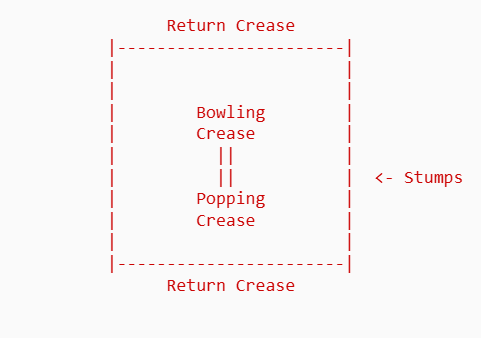
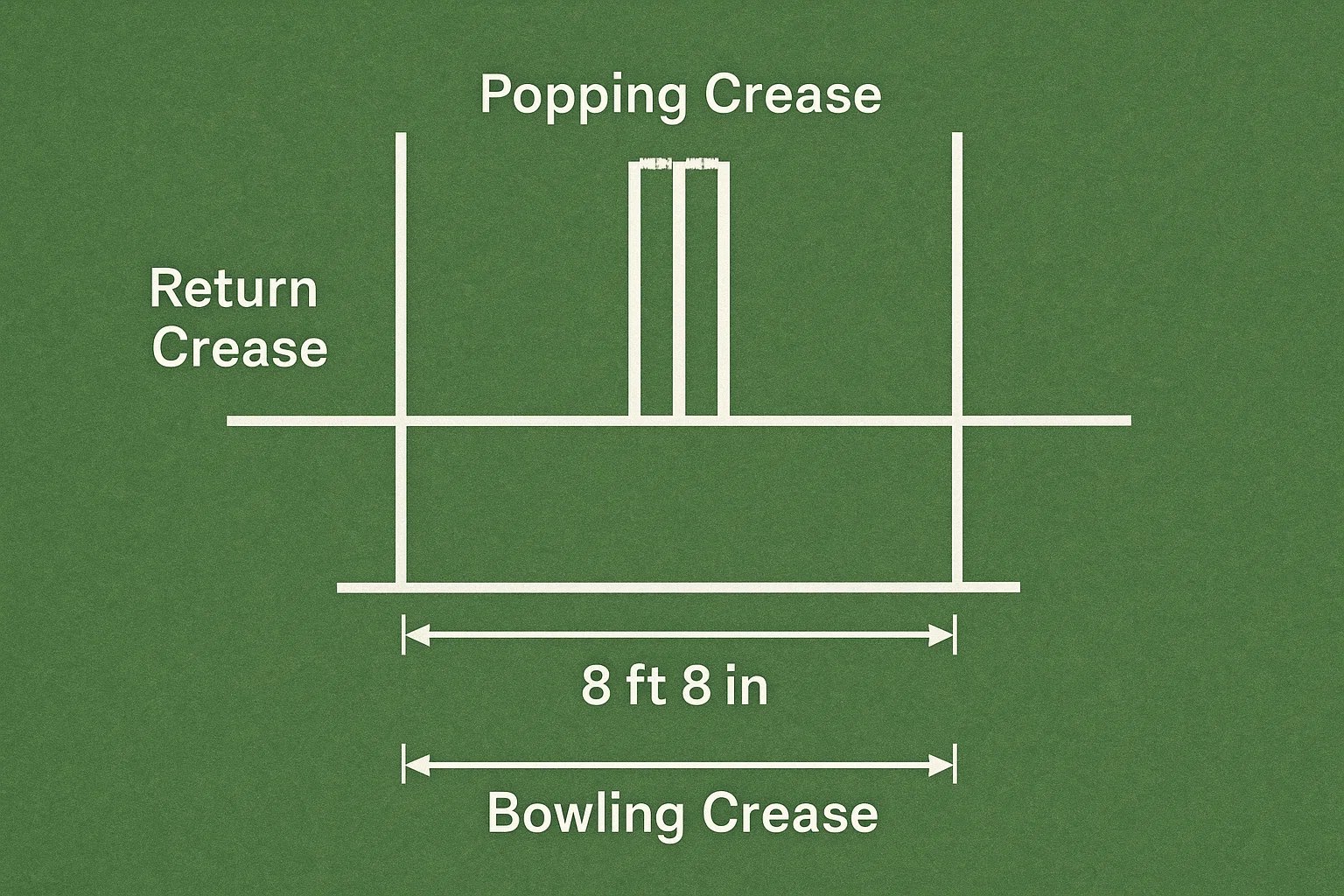
There are a total of eight creases in a cricket pitch: four on each side—2 popping creases, 2 bowling creases, & 4 return creases (2 at each end), each with specific dimensions & length. The creases are helpful in deciding the stump area, run-outs or LBWs, and legal delivery.
Type of Crease
Number on the Pitch
Description
Bowling Crease
2 (one at each end)
The line on which the stumps are set. It marks the area where the bowler delivers the ball.
Popping Crease
2 (one at each end)
The line is used to determine if the batter is safe or run out/stumped. The batter must have part of the bat or body behind this line.
Return Crease
4 (two at each end)
Lines perpendicular to the bowling crease. They mark the area within which the bowler’s back foot must stay during delivery.
Total Creases
8 in total
2 bowling + 2 popping + 4 return creases on the entire pitch.
What is the Length of Cricket Creases in Feet
In cricket, the bowling crease measures 8 feet 8 inches (2.68 meters) in length while the popping crease lies 4 feet (1.21 meters) in front of the bowling crease at each end. The return creases which are drawn perpendicular to the bowling crease, extend 4 feet 4 inches (1.34 meters)on either side of the stumps.
Type of Crease
Length
Position
Bowling Crease
8 ft 8 in
Line on which the stumps are placed at each end.
Popping Crease
4 ft (in front of bowling crease)
Batter must be behind this line to be safe; it extends across the pitch.
Return Crease
4 ft 4 in
Perpendicular to bowling crease; marks the area for the bowler’s back foot.
Types of Creases in Cricket
Now coming to the toughest part which often confuses the viewers – The types of creases in cricket. There are four types of creases in cricket: One popping crease, one bowling crease, and two return creases. The bowling crease indicates the boundary of the pitch for the bowler, whereas the popping crease functions as the safety line for the batsman. The return creases denote the bowler’s positioning.
Bowling Crease in Cricket
The bowling crease is a line on the pitch where the stumps are placed. It stretches about eight feet eight inches across and shows where the bowler delivers the ball to the batter. Every delivery in cricket begins from this line.
Example of Bowling Crease: When Jasprit Bumrah bowls, he makes sure his front foot stays behind the bowling crease so the ball is not called a no-ball.
Popping Crease in Cricket
The popping crease is a line drawn around four feet in front of the bowling crease. It marks the area where the batter must stay safe. If the bat or foot is behind this line, the batter cannot be run out.
Example of Popping Crease: When MS Dhoni stumps a batter, the umpire checks whether the batter’s bat or foot was behind the popping crease at that moment.
Return Creases in Cricket
The return creases are two lines drawn at right angles to the bowling crease on either side of the stumps. They are about four feet four inches long and show the bowler’s movement area while delivering the ball.
Example of Return Crease: When Glenn McGrath used to bowl, he kept his back foot inside the return crease to maintain.
How Many Creases are There in Cricket IPL
In IPL, there are 8 creases on each side: the batsman side & bowler side. It is the same as the other format of cricket – Two bowling creases, two popping creases, and four return creases. The length and design of creases are also the same throughout the cricket formats.
Why are Creases in Cricket Important? Understand with Example
Creases in cricket are important because they define the positions and limits for both the bowler and the batter. They ensure fair play by marking where the bowler must deliver the ball and where the batter must stay safe from being dismissed.
Real Cricketing Example of Creases in Cricket
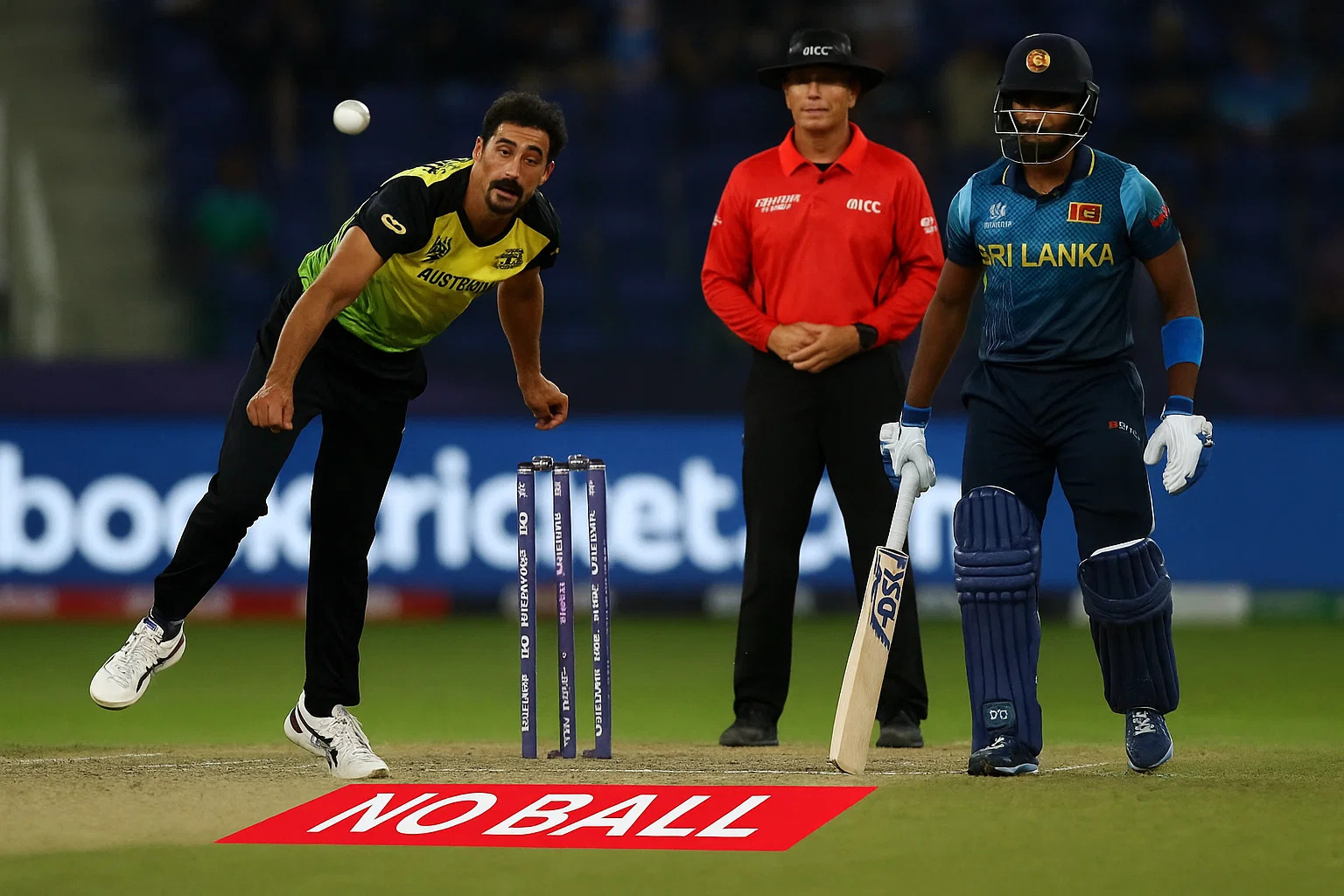
During the ICC Men’s T20 World Cup 2021, Mitchell Starc bowled to Chamika Karunaratne. As he delivered the ball, his back foot landed on the return crease. According to the rules, the back foot must stay completely within the return crease. The umpire called it a no-ball, showing how important creases are in deciding whether a delivery is legal or not.
Frequently Asked Questions
What are the 4 creases in cricket?
Four creases in cricket are: one bowling crease, one popping crease, and two return creases at each end of the pitch.
How long is a crease in cricket?
The bowling crease is 8 feet 8 inches long, the popping crease is 4 feet in front of it, and the return creases are about 4 feet 4 inches long.
Why is it called popping creases?
It is called the popping crease because it marks the line the batter must “pop” back to stay safe from being run out or stumped.
Length of bowling crease in Cricket
The length of the bowling crease in cricket is 8 ft 8 inches where the stumps are placed for each delivery.
Do crease rules change in T20s or Tests?
No. The length of the crease and its rules stay the same in T20s, One Day matches, or Test cricket.
Pankaj Suyal is a sports enthusiast and fantasy gaming expert who transforms his love for the game into compelling content. From match previews to player analysis and trending updates, he brings the sports world closer to his readers. When he is not writing, you will find him creating fantasy team or deep into a book (Yes, he is a bibliophile).